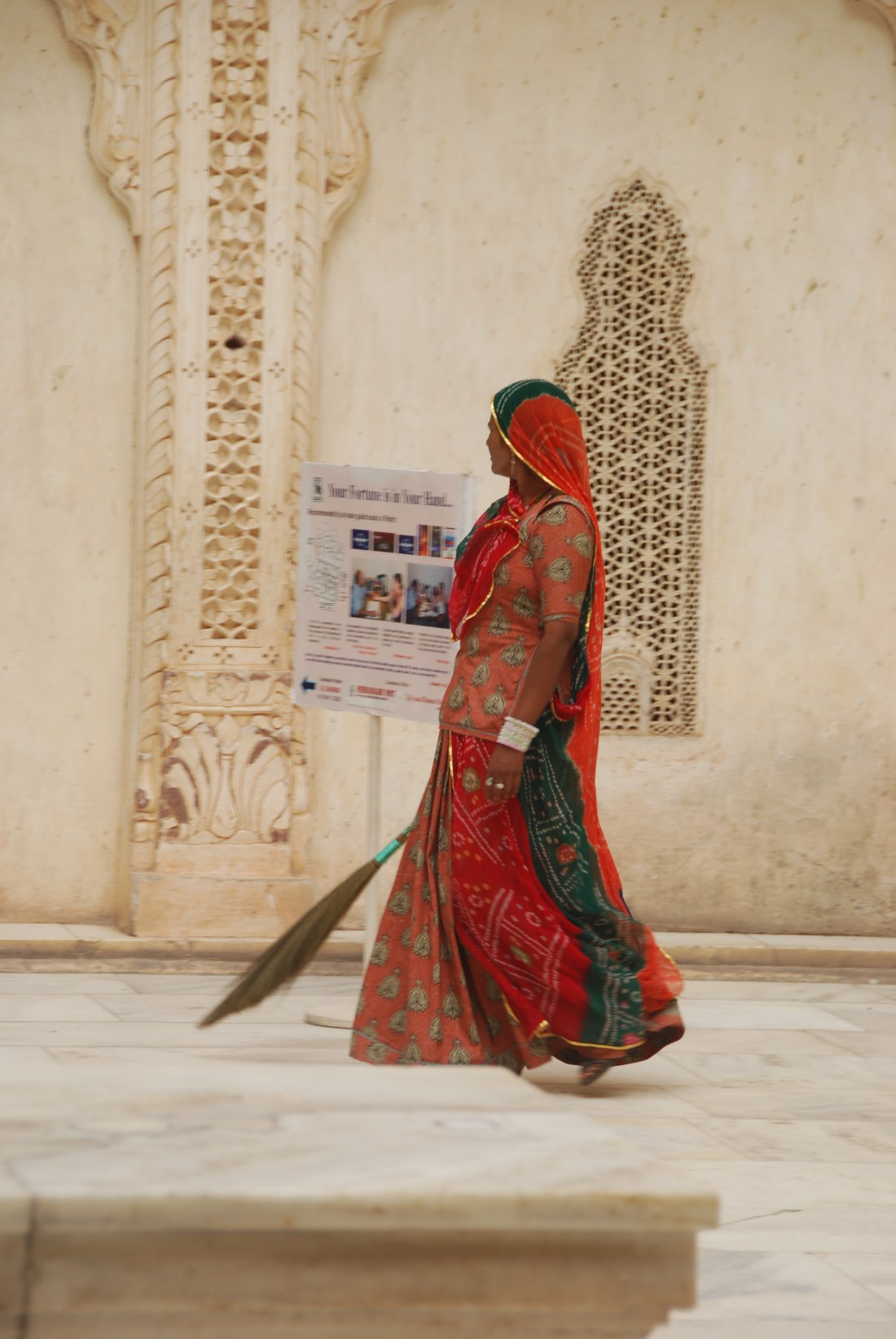
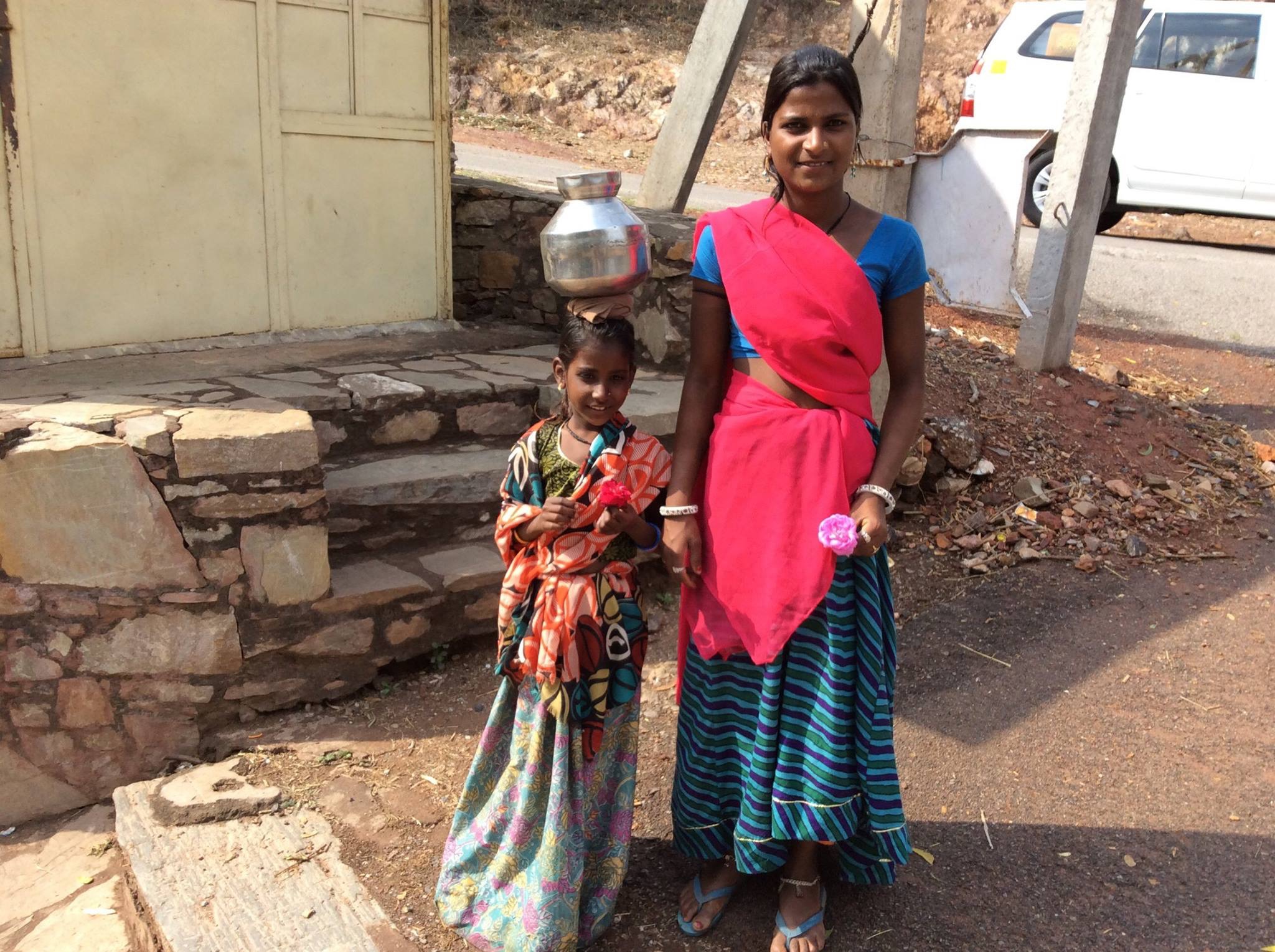
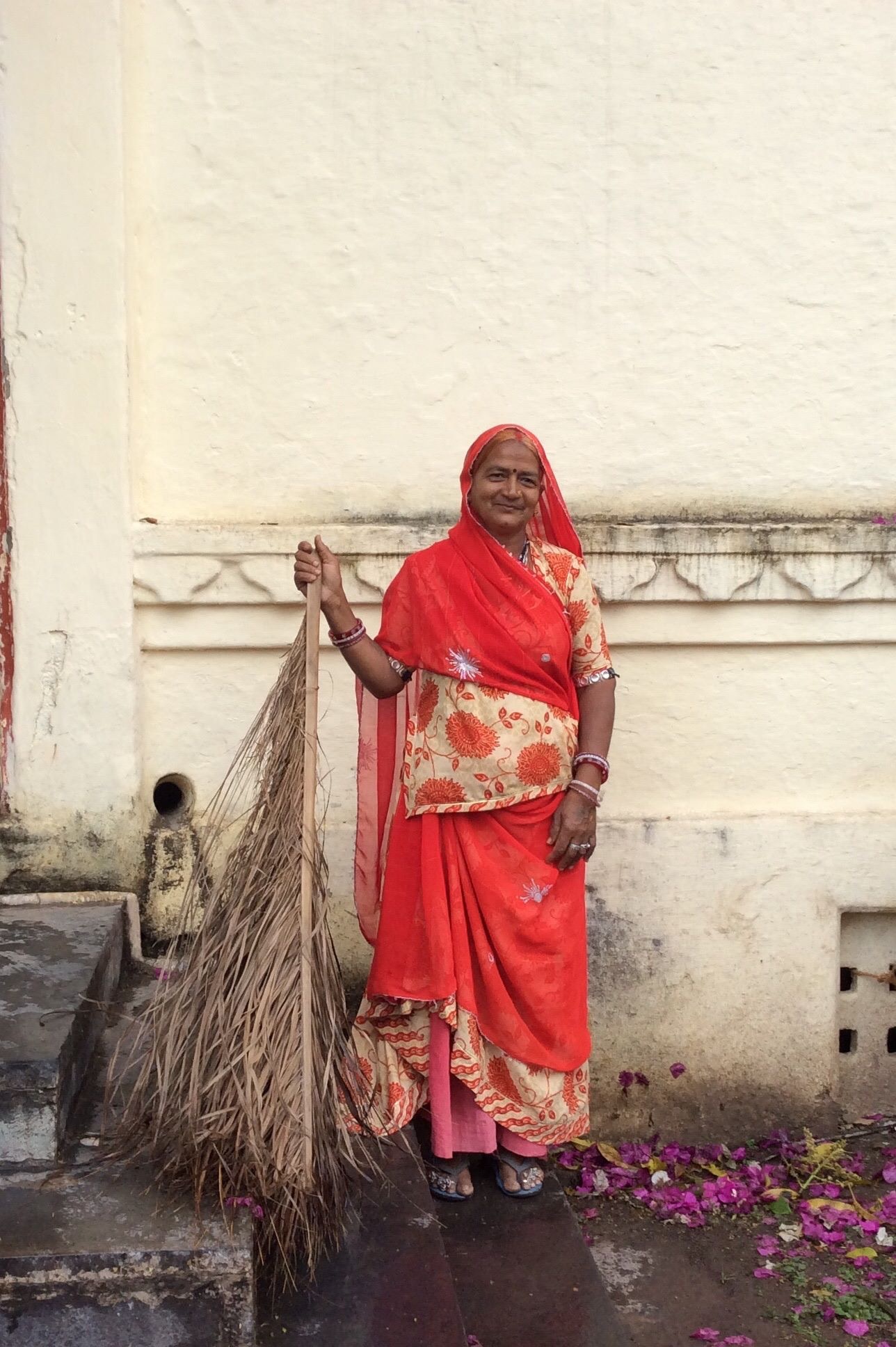
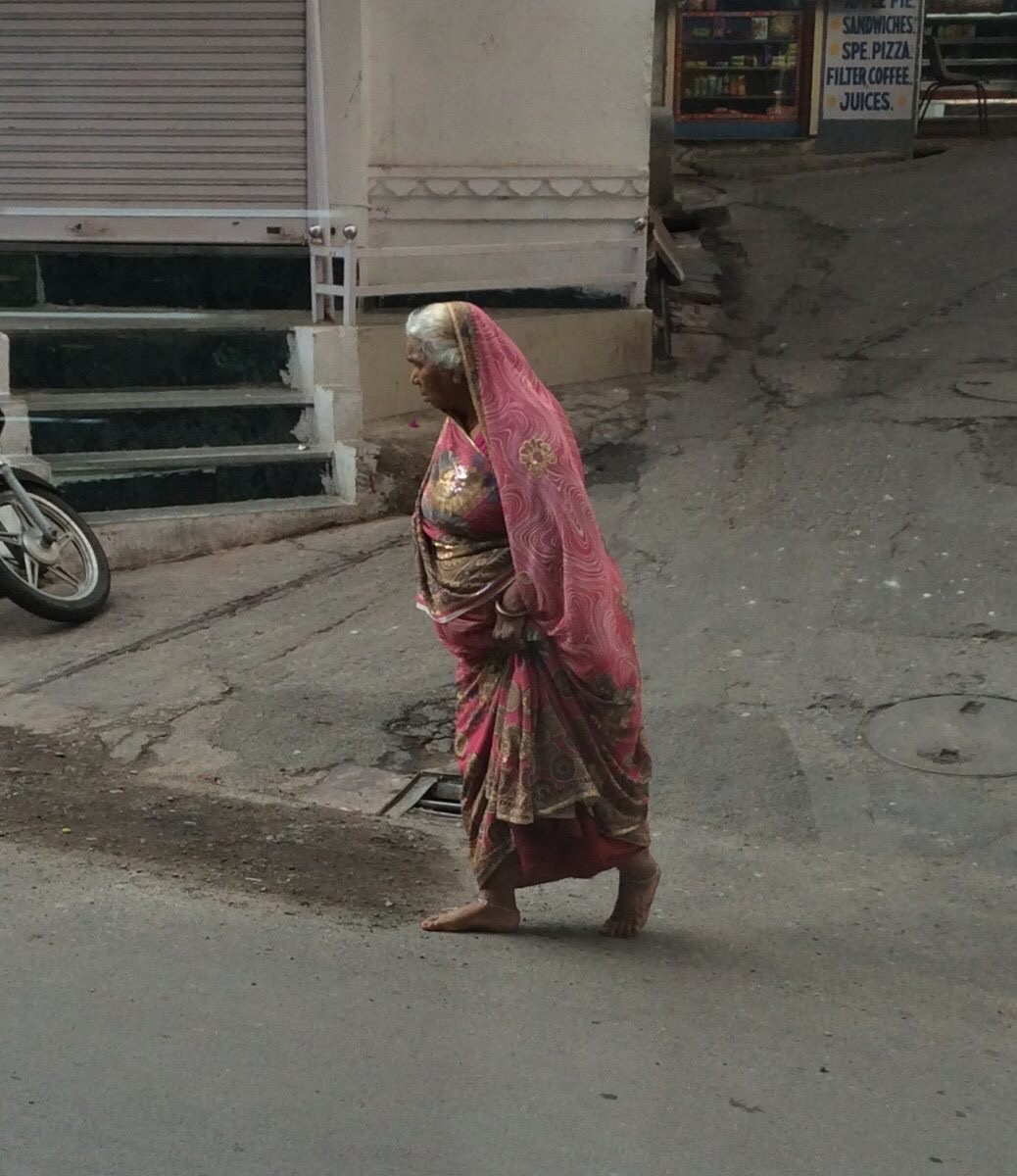
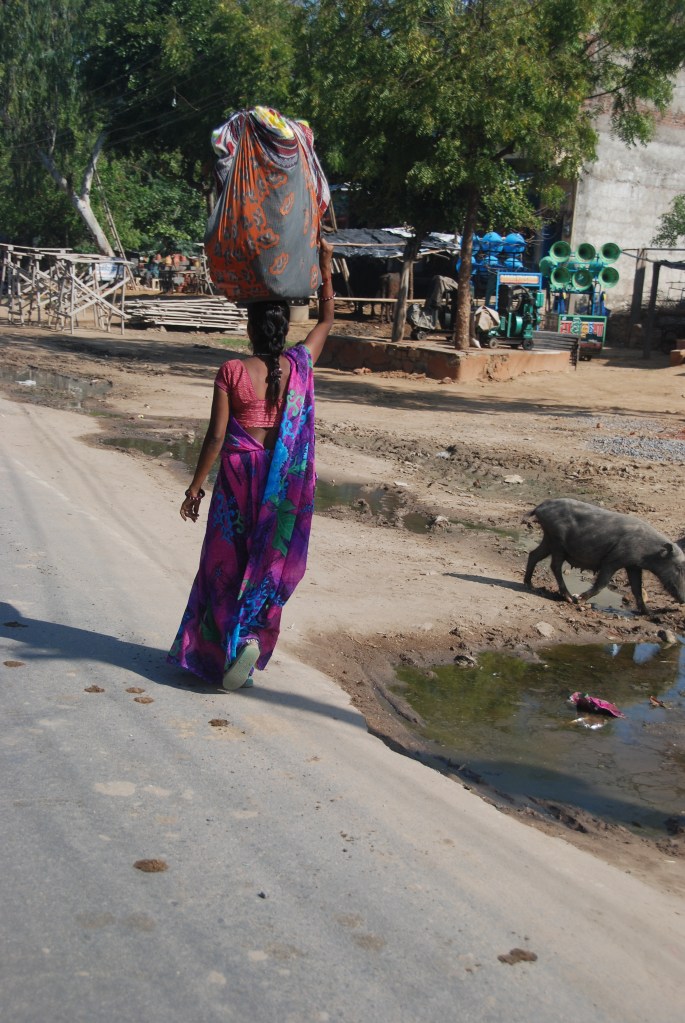
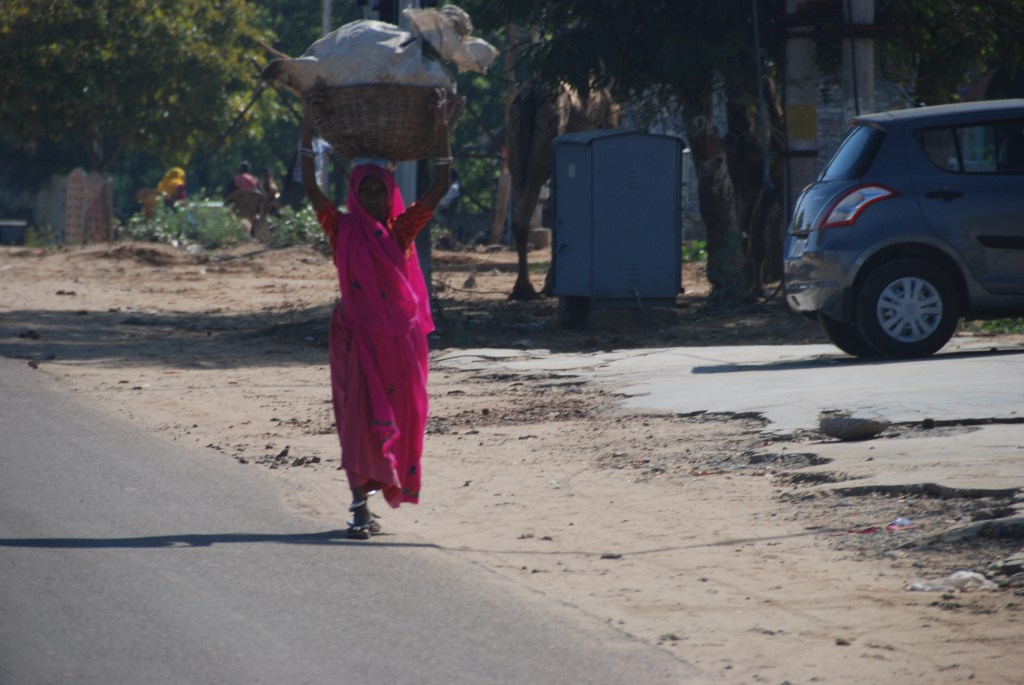
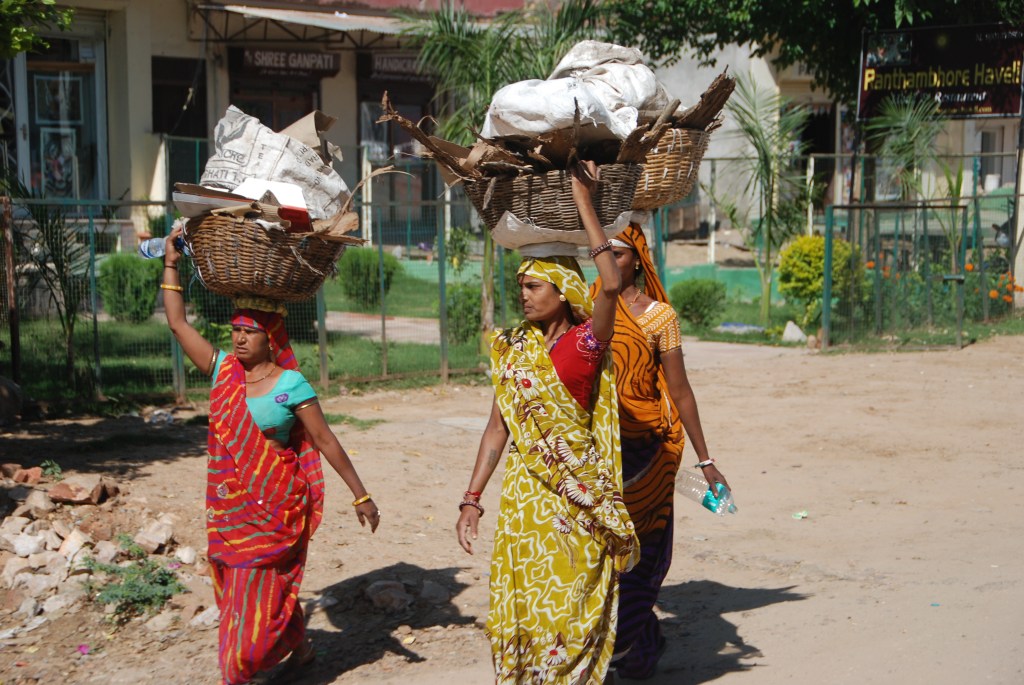
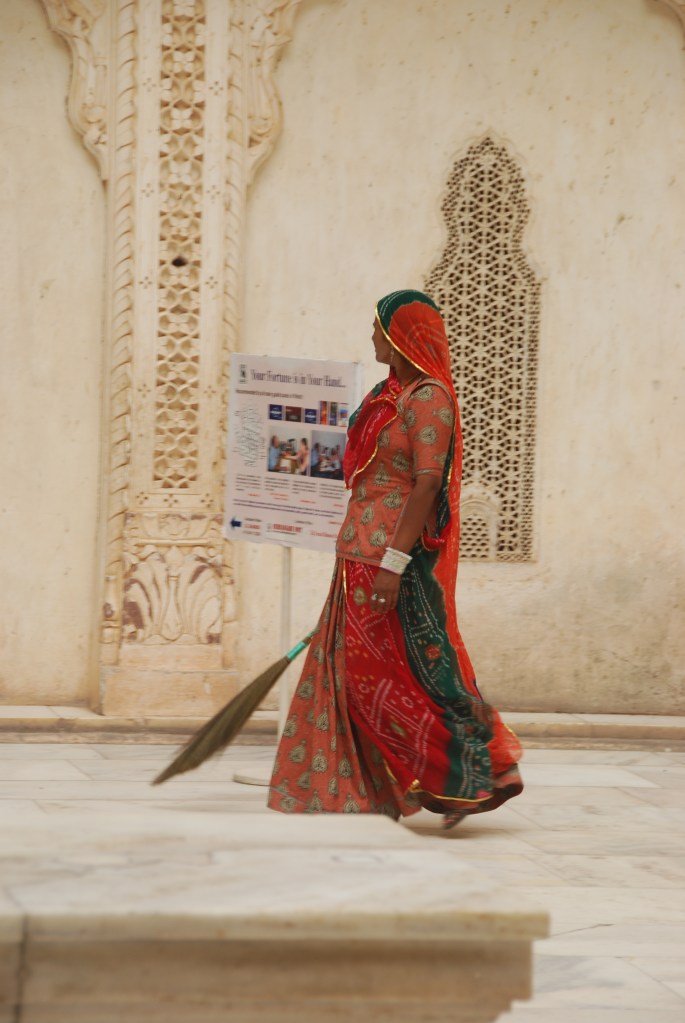
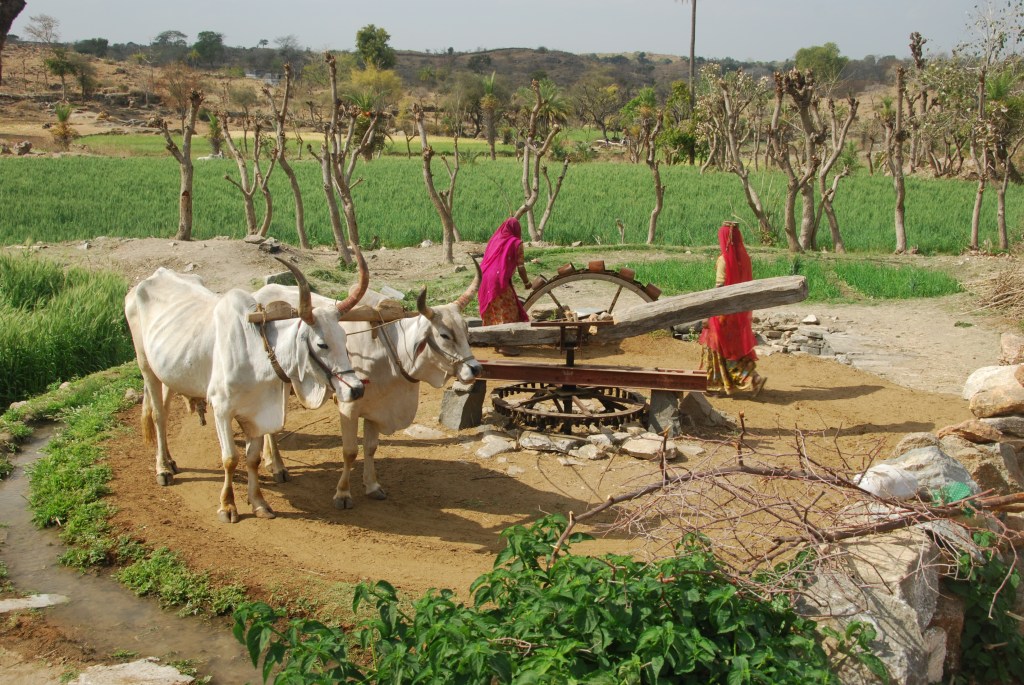
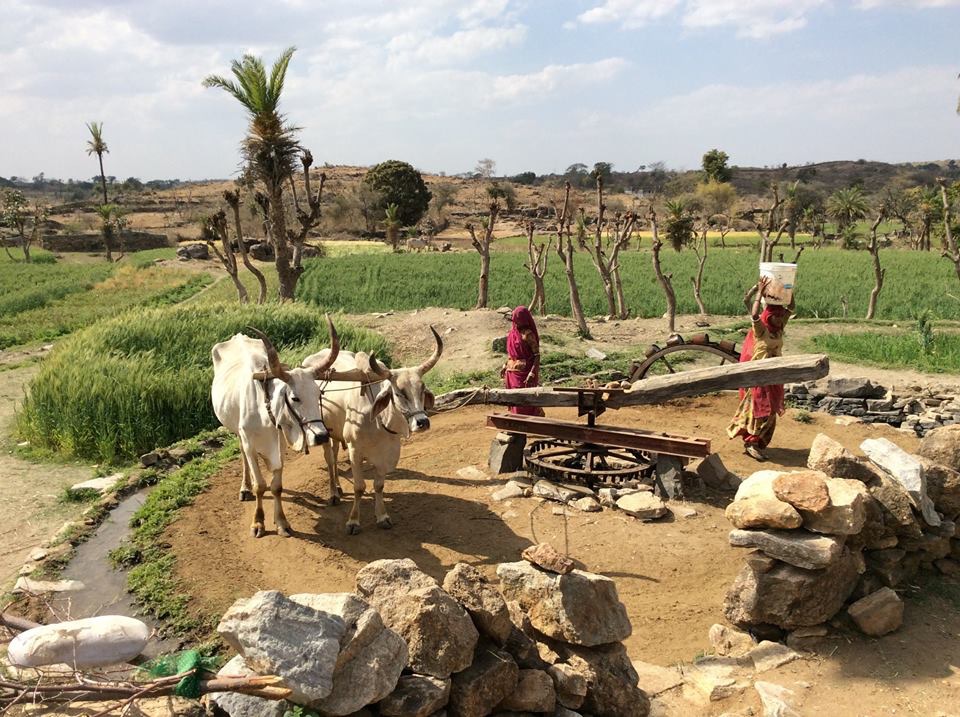
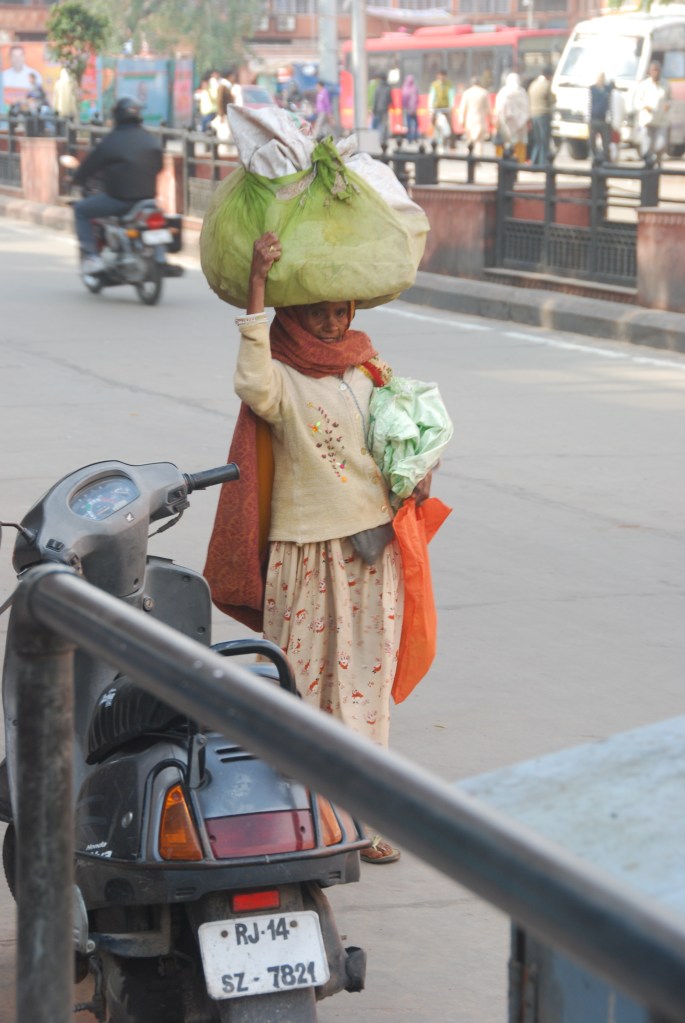
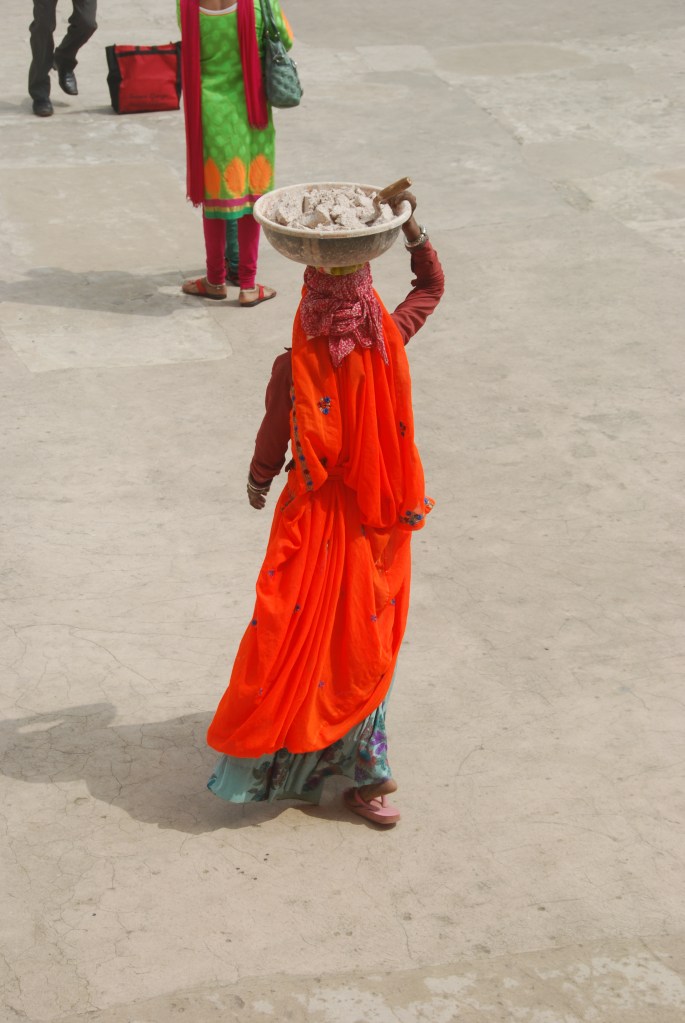
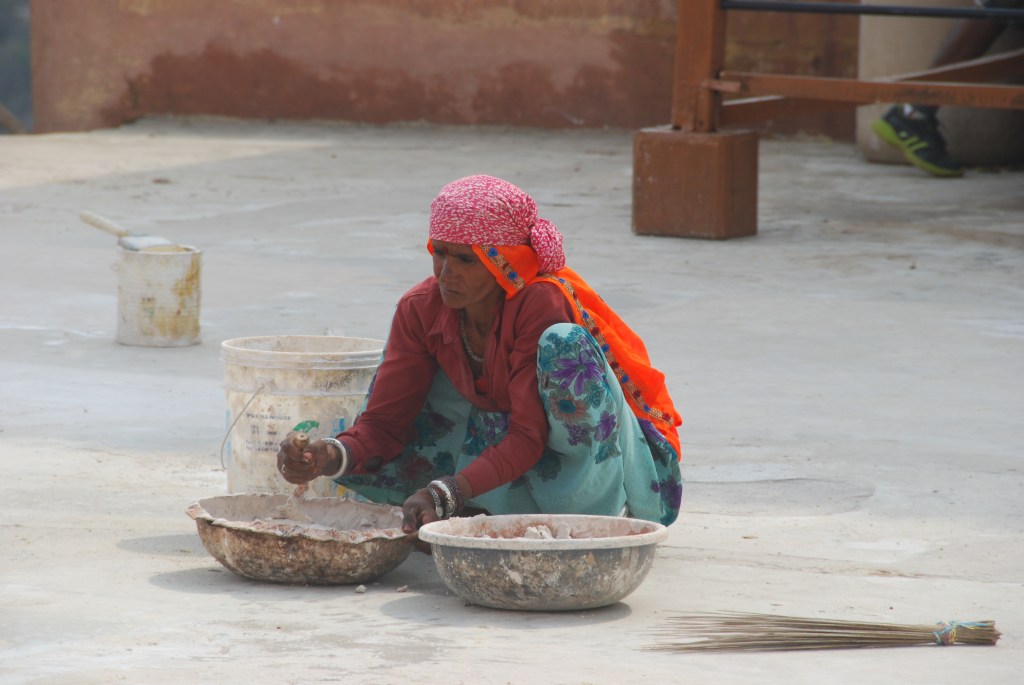
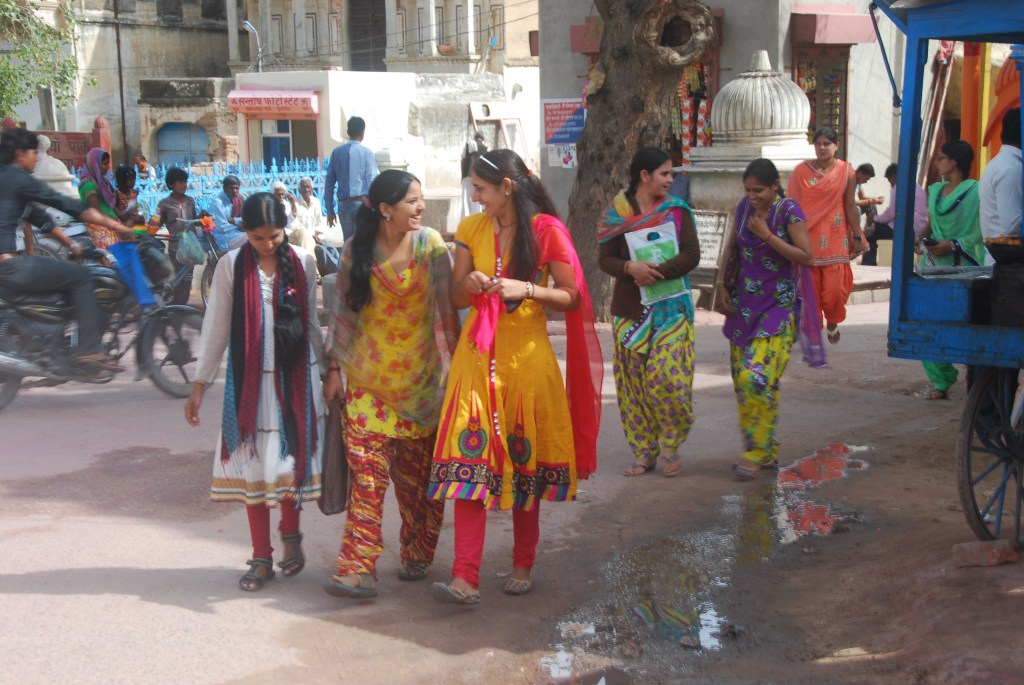
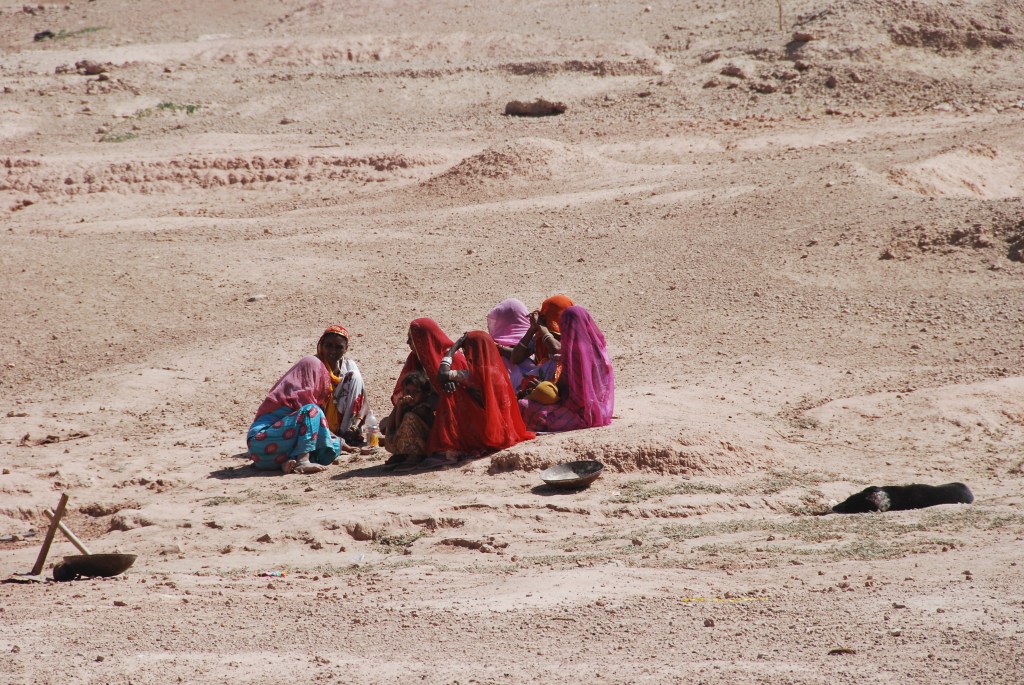
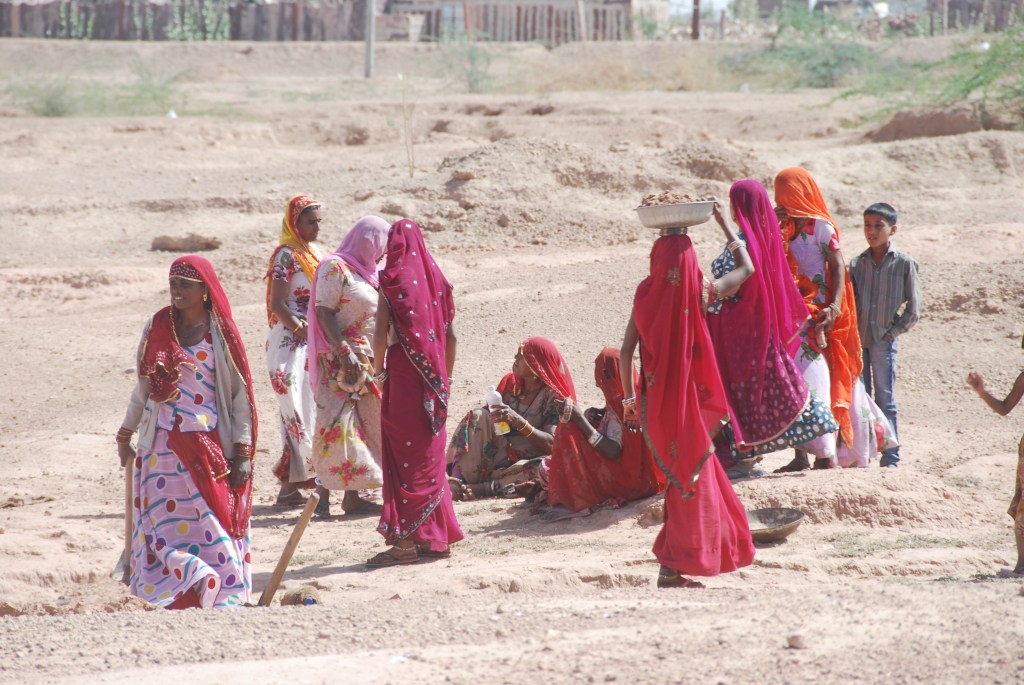
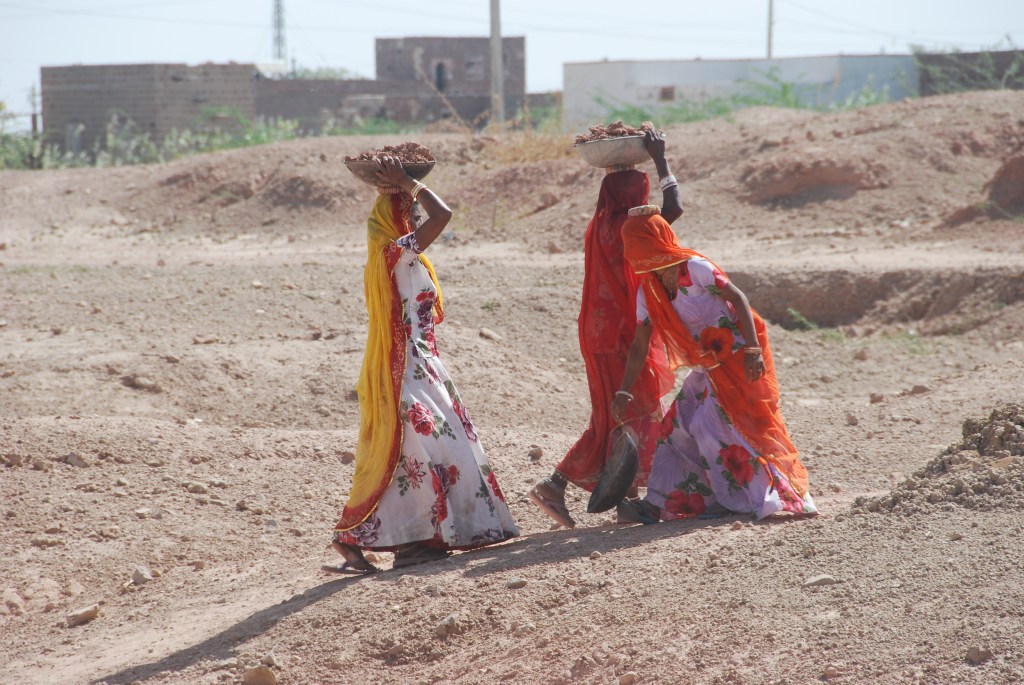
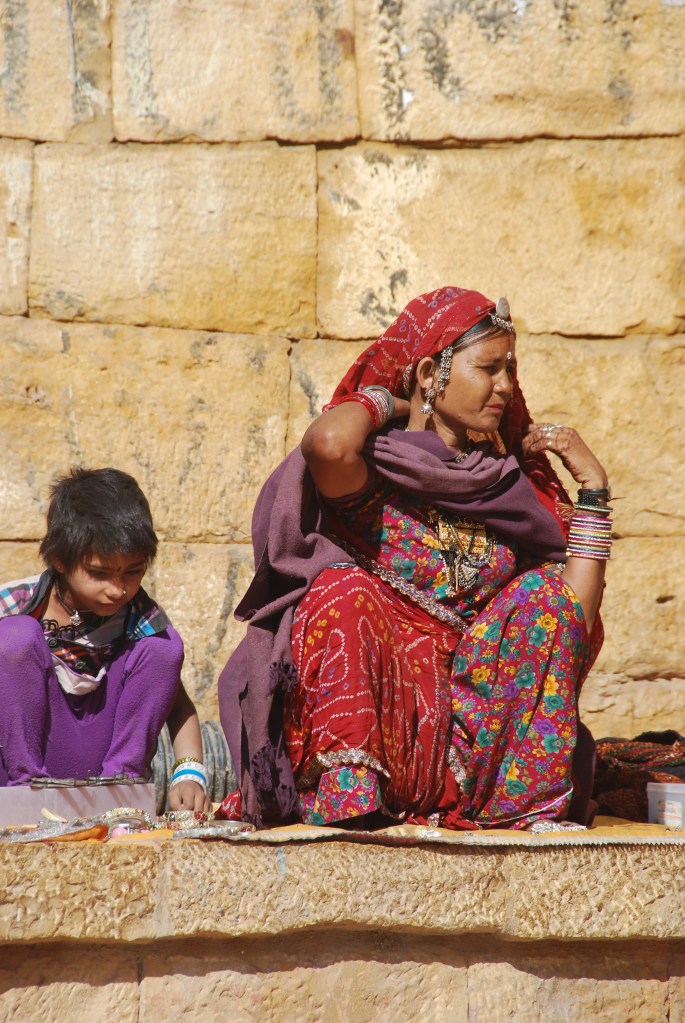
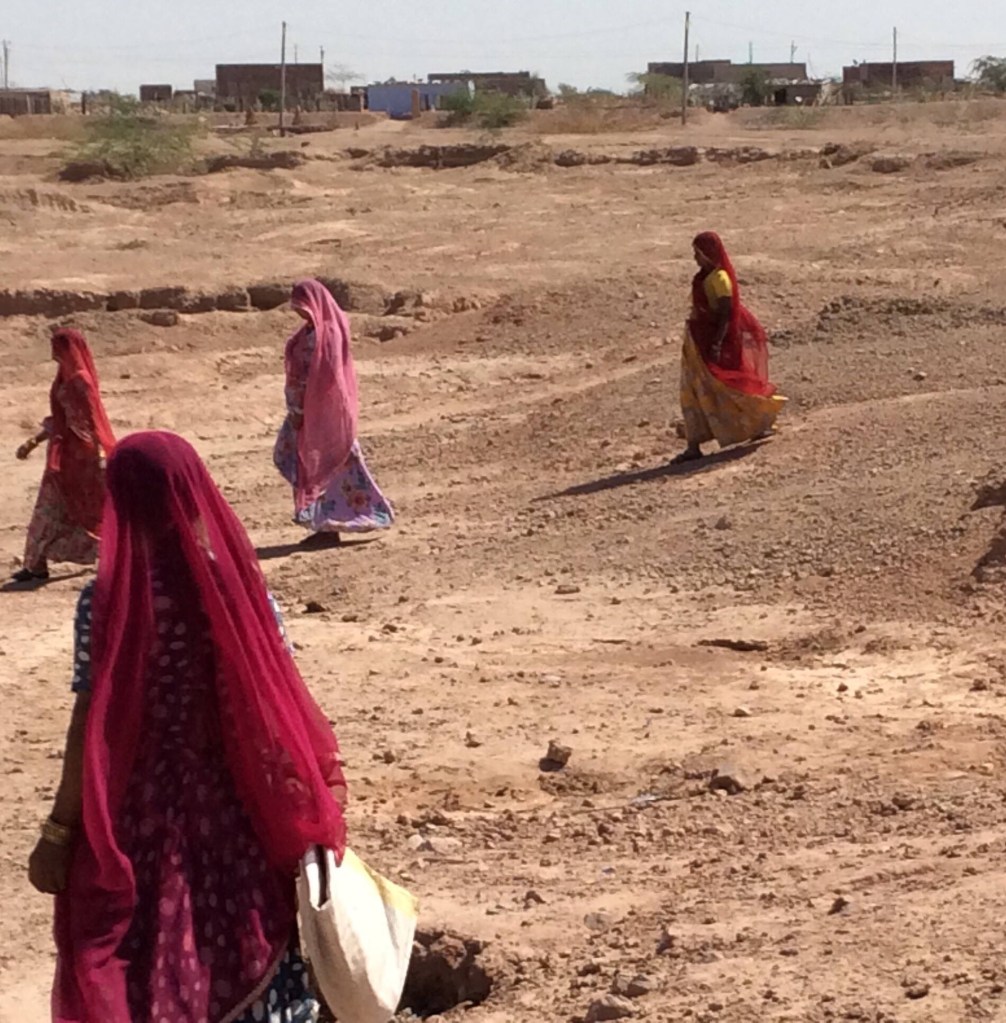
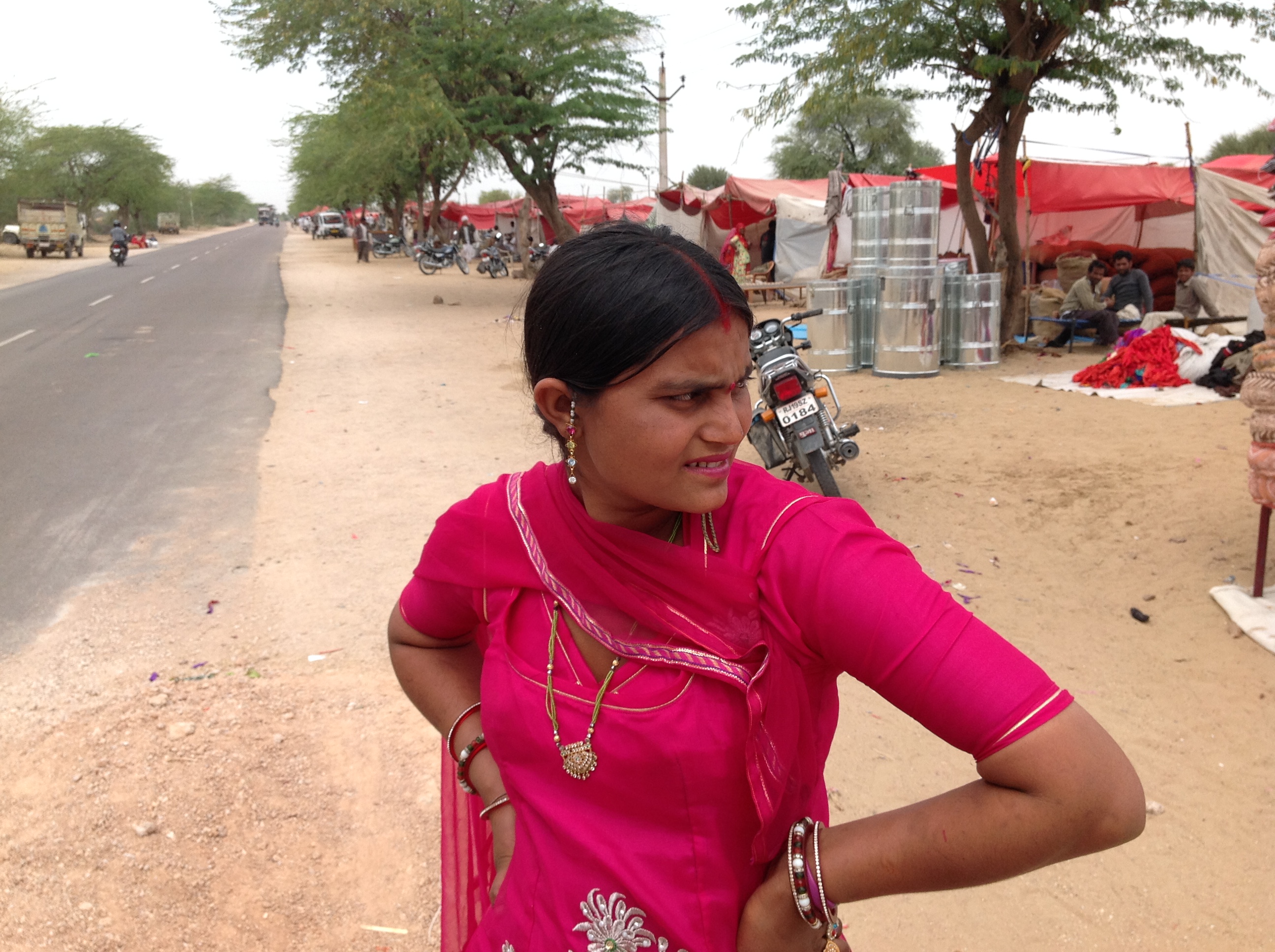
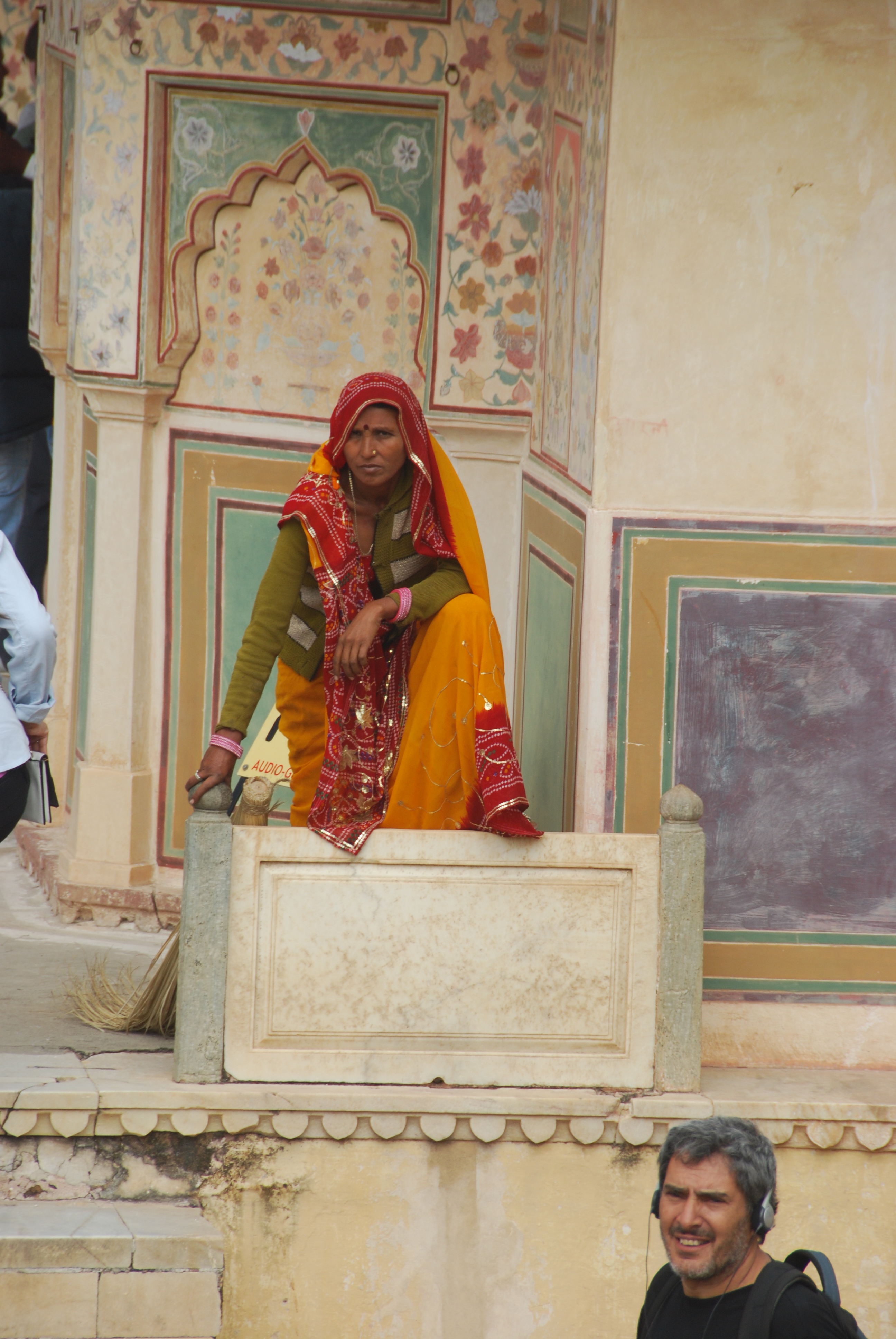
I so admired the beautiful Rajasthani women in their colourful clothing. While India has its fair representation of female doctors, lawyers, engineers, architects, teachers and other university educated professionals, the women that I encountered on this trip were usually simple working women. They were the cleaners in the temples, the workers in the fields, the vendors selling their wares, the ladies carrying huge burdens on their heads and often labourers clearing rubble or working water wheels. Their clothing was always vibrant and, in the most difficult of circumstances, usually immaculately clean. I loved their clothing so much, in fact, that when I saw Photographs of traditional Rajasthani wedding attire with full red skirts heavy with intricately hand sewn threads of gold, I was determined to find one for my own wedding later in the year. Our driver, Mahendra, appeared to be horrified at the very idea that I would want a previously worn antique. He kept trying to steer me towards the more modern and more garish varieties, often in bright green or yellow with machine sewn flimsy gold thread.
It took some time to discover the reason behind his repugnance. It seems that on the death of a Hindu woman (or man), all that persons possessions, including clothing and bedding, traditionally went into the funeral pyre with them. This, no doubt, helped to prevent the spread of fatal infectious diseases in times when medical services were limited. I do not know if this practise still exists but the obvious repugnance at the thought of wearing dead people’s clothes, clearly remains entrenched in social mores.
 maryannsholidays