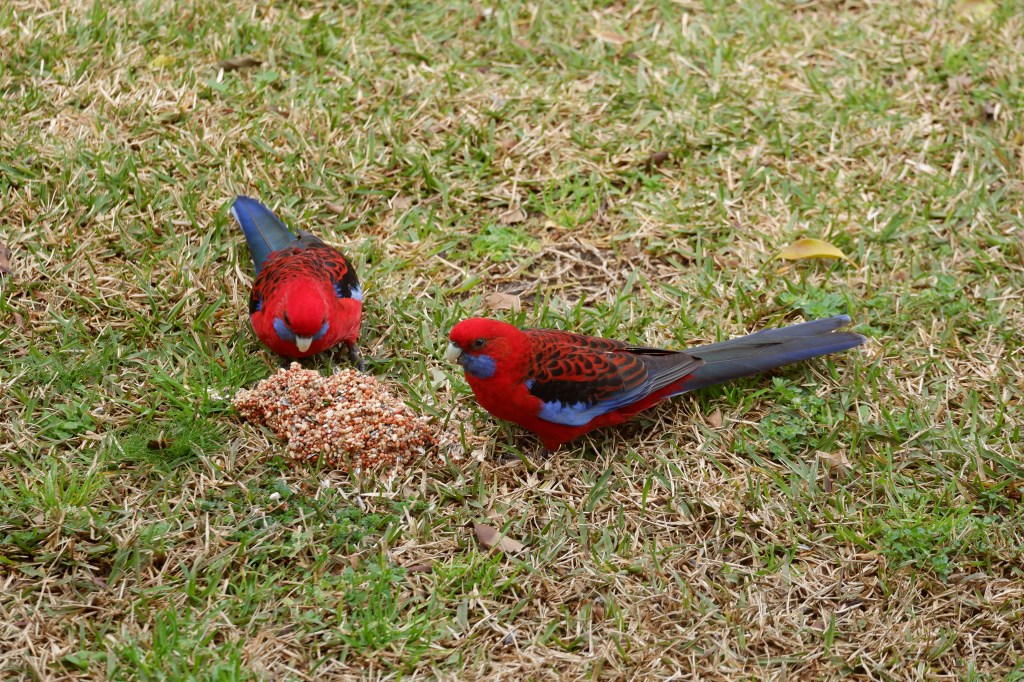
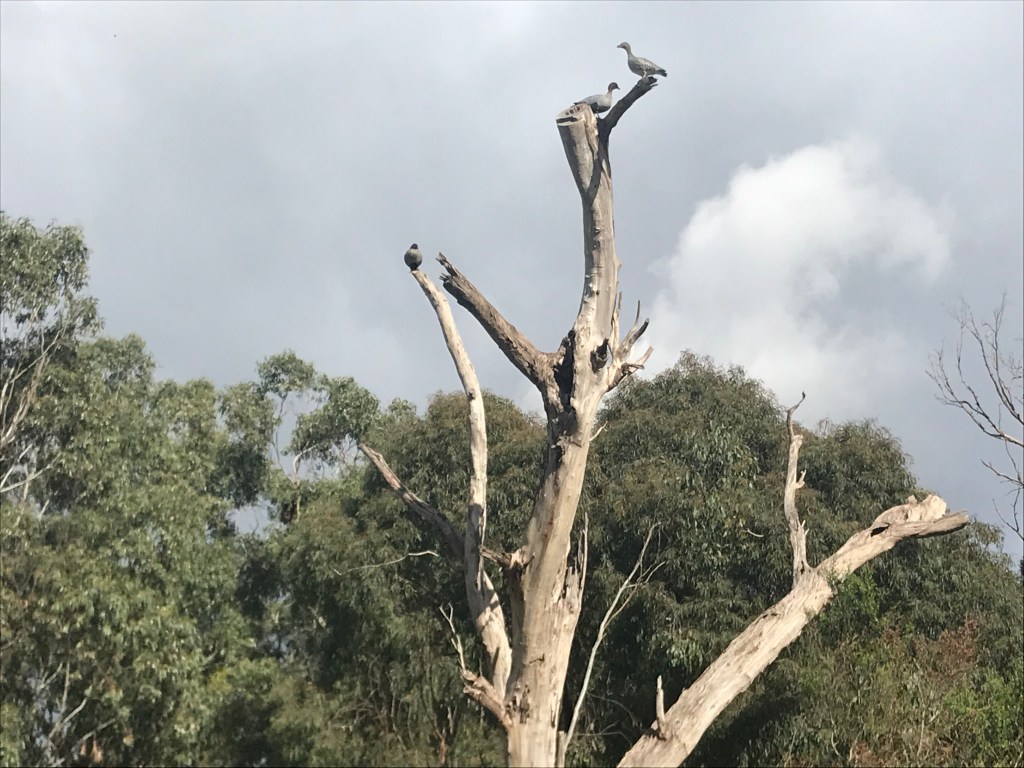
With few other distractions, we have felt so grateful to live adjacent to the Churchill National park in this past five months of COVID lockdowns. What has always been a pleasant walk or invigorating hike, has now become the opportunity to practice mindfulness and meditation. We have always loved chancing upon a group of kangaroos, wallabies, a lone echidna, an occasional snake and the sight of beautiful parrots, rosellas, black cockatoos, fairy blue wrens and, on rare occasions, a hawk. A few times I have been nonplussed to see ducks sitting high up in a tree. Yet these days our senses have become even more attuned to the oasis of wildlife that we are so fortunate to experience every day.
Even from my front window, I watch for hours as the various birds reveal their personalities to me. The conceited Noisy Miner Birds are forever admiring their reflections in car windows or rear view mirrors. They stop only to exhibit their spitefulness by forming groups to aggressively force other birds away from their territory.
The Magpies, notorious for stealing chicks from the nests of other species, become ferociously protective during their own nesting period. Bike riders have taken to wearing spikes on their helmets and unsuspecting walkers have been known to be pecked so much on their unprotected heads that blood streams down their faces.Walking in the park we are often delighted to hear the laughing call of the kookaburras, the pretty song of the bell birds, or the serenades of the whip bird.The tiny fairy blue wren darts from here to there at great speed, flashing the vibrant blue markings on its wings while catching almost imperceptible insects. Last year we were delighted to find one its cleverly constructed nests. At about seventy-five millimetres long and looking as if it is spun with silk, it is a miracle of engineering. We were able to stand on tip toes and peek inside to find four tiny, pale blue eggs. After a few weeks, we were thrilled to discover four little beaks opening and shutting and squeaking for food. We knew that in just over two weeks they would become fledglings and leave the nest. We waited another five days after that and then carefully carried the nest home and placed it in Astrid and Isobel’s special ornamental tree for their enjoyment.
Our favourite bird is the Crimson Rosella, with its red head and body contrasting to the vibrant blue of its tail and the outer edges of its wings. The juvenile isn’t nearly so pretty with mottled red and green that gradually transforms into the splendid adult creature. A few years ago we started luring a pair into our front garden in winter with seed blocks. We were gratified when they returned, season after season. Then this year, something changed. More birds arrived, sometimes they shared the seed block cooperatively, with one adult bird sitting on our roof guttering waiting patiently until bird number one flew to a tree across the road along with its juvenile. The next adult would start munching on the block while it’s juvenile foraged on the surplus seeds that had dropped into the daffodils beneath.
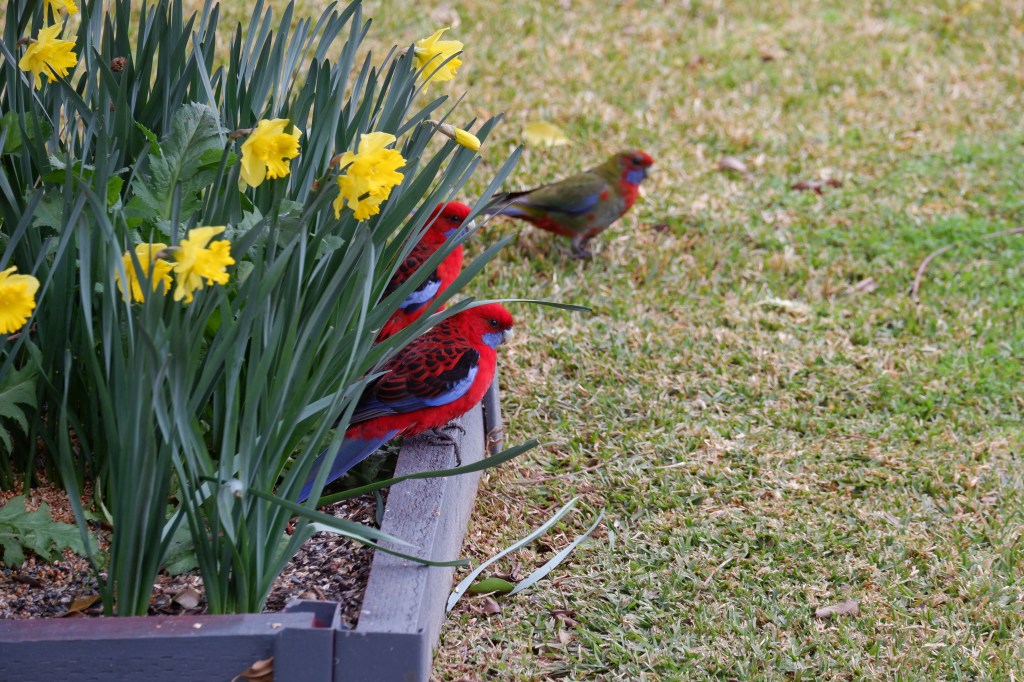
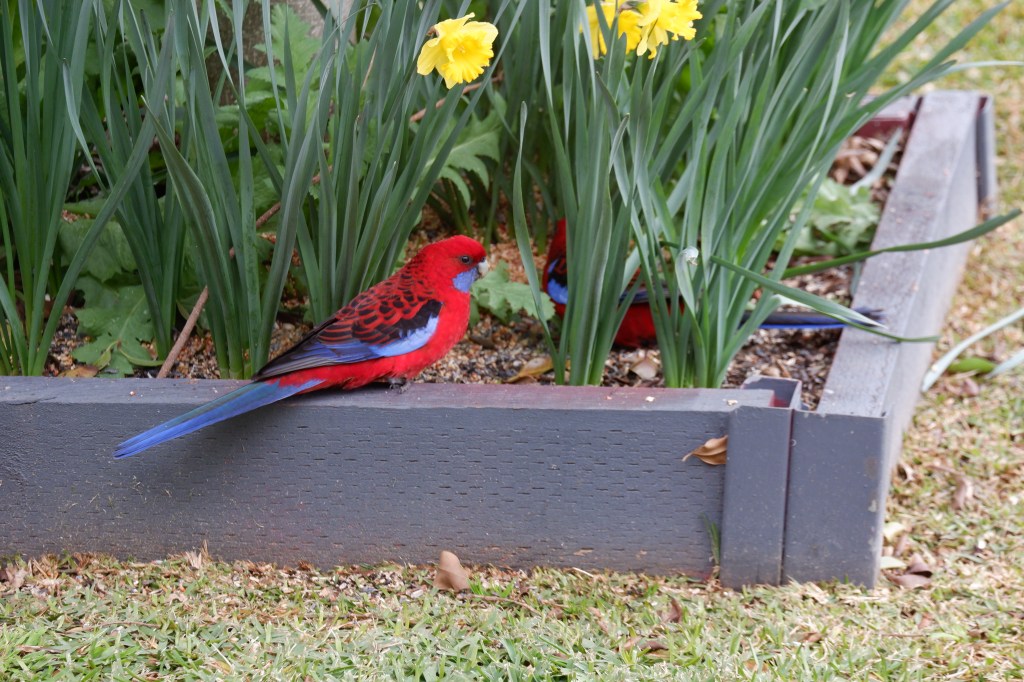
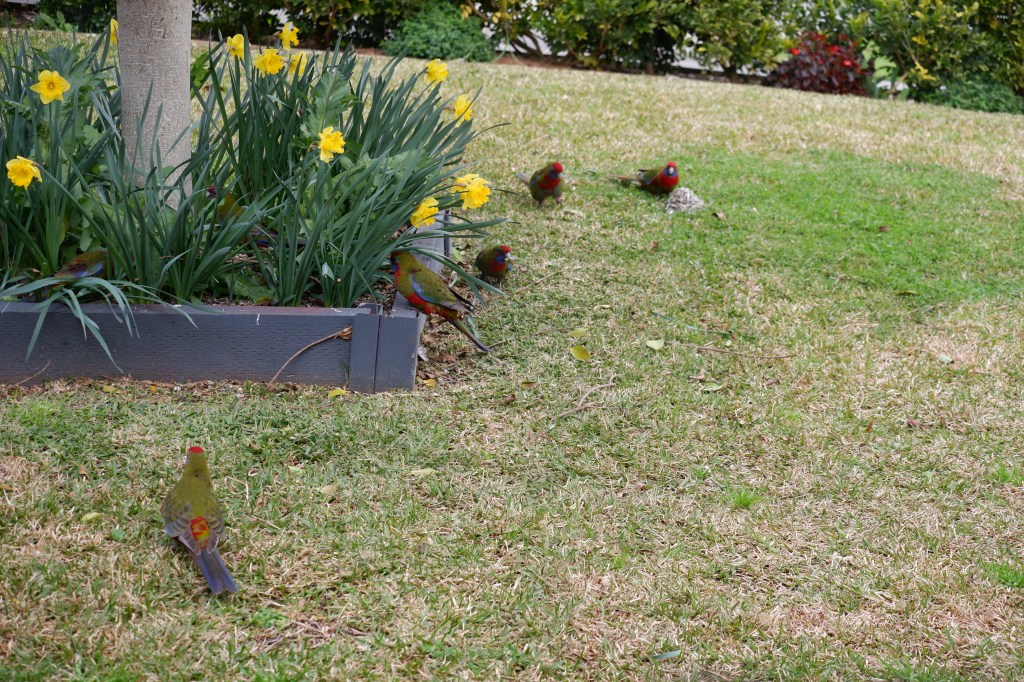
We have counted up to eight juveniles at a time and laughed at their cute antics. One larger, dominant juvenile bosses the others away from the seed block or pushes them off the garden border if they approach while he is munching dropped seeds from the daffodil bed. One morning we awoke to tapping on the window above our bed. We assumed it was a narcissistic Noisy Miner but when we carefully opened the shutters, we discovered that it was one of ‘the boys’, a Crimson Rosella.
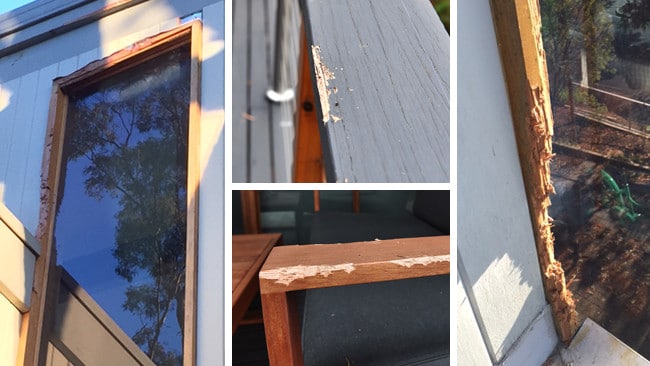
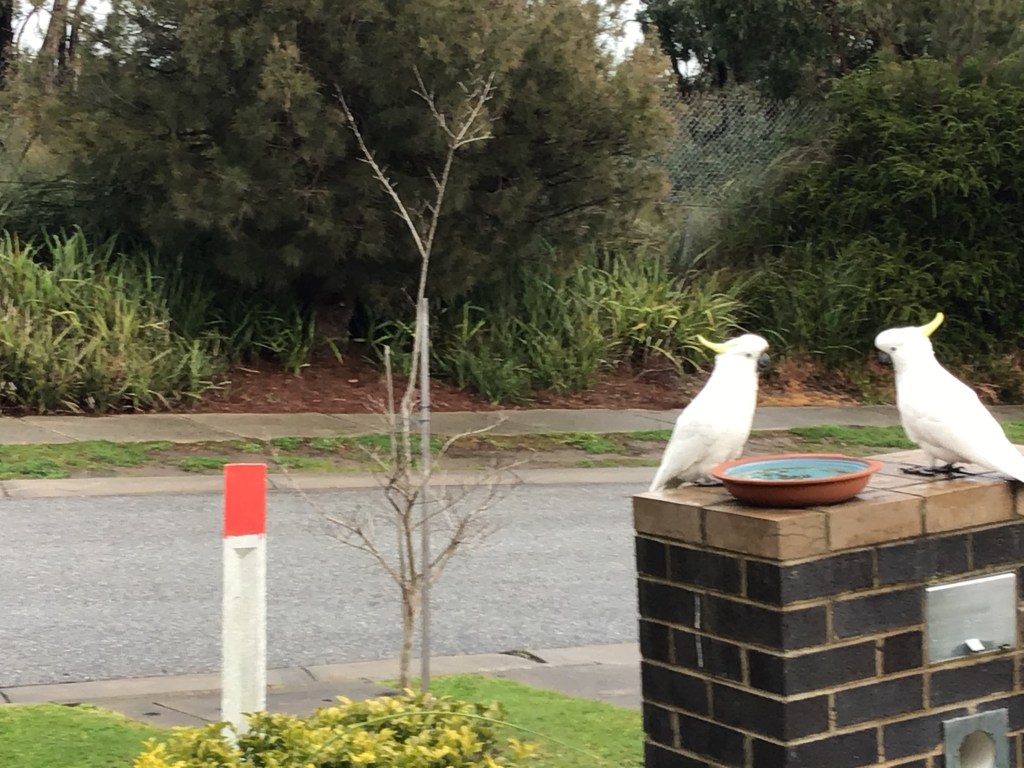
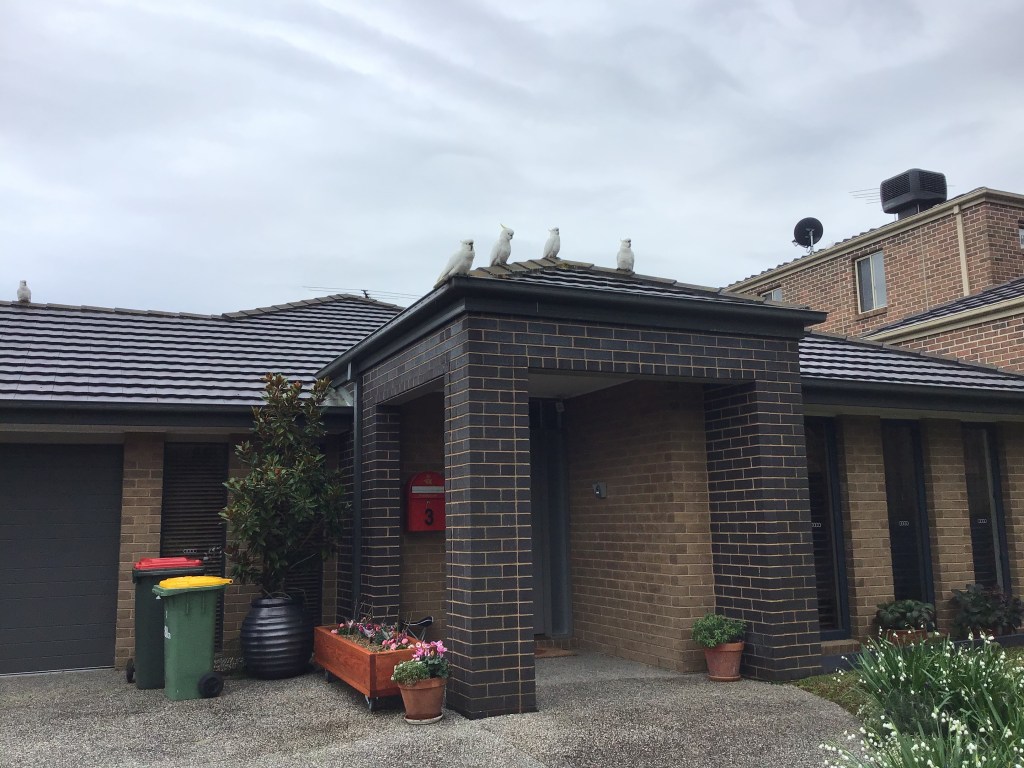
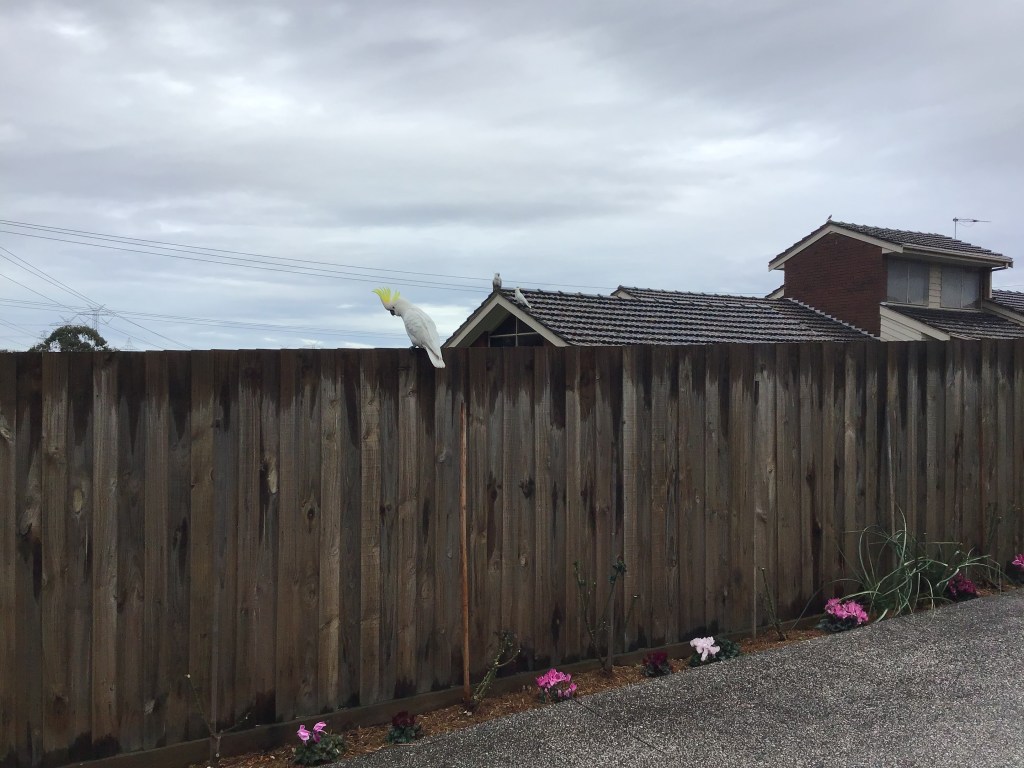
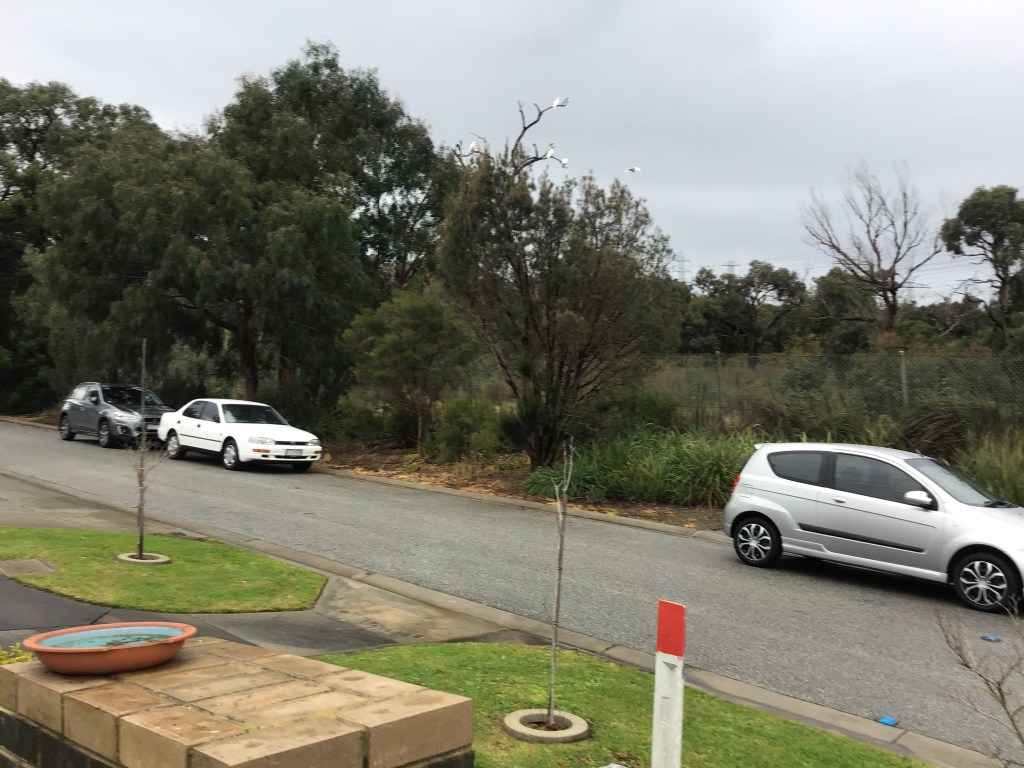
A week before we had woken early to the ugly cacophony of the piercing squealing and squawking of a flock of sulphur-crested cockatoos. This signalled that they had discovered the seed block and as their groups can easily number thirty or forty at a time, it would be devoured in ten minutes. The sulphur-crested cockatoo is considered to be the most intelligent of the parrots and is a clever mimic, capable of learning words and whole phrases. Some people keep them as pets and find that they are very affectionate and bond with humans readily. Many more people, however, find them to be pests. They can swarm on neighbourhoods in huge groups and have been known to devour entire verandas and wooden garden setting, not for consumption, but to sharpen their beaks. Such is the contempt that many people have for them, they are often described as ‘flying rats’. I try to shoo them away from our property when I see them, not because any part of our house is wooden, but because they are also destructive for no apparent reason, pulling off flower heads and ripping up small plants. This time, however, I knew that they were after the seed block!
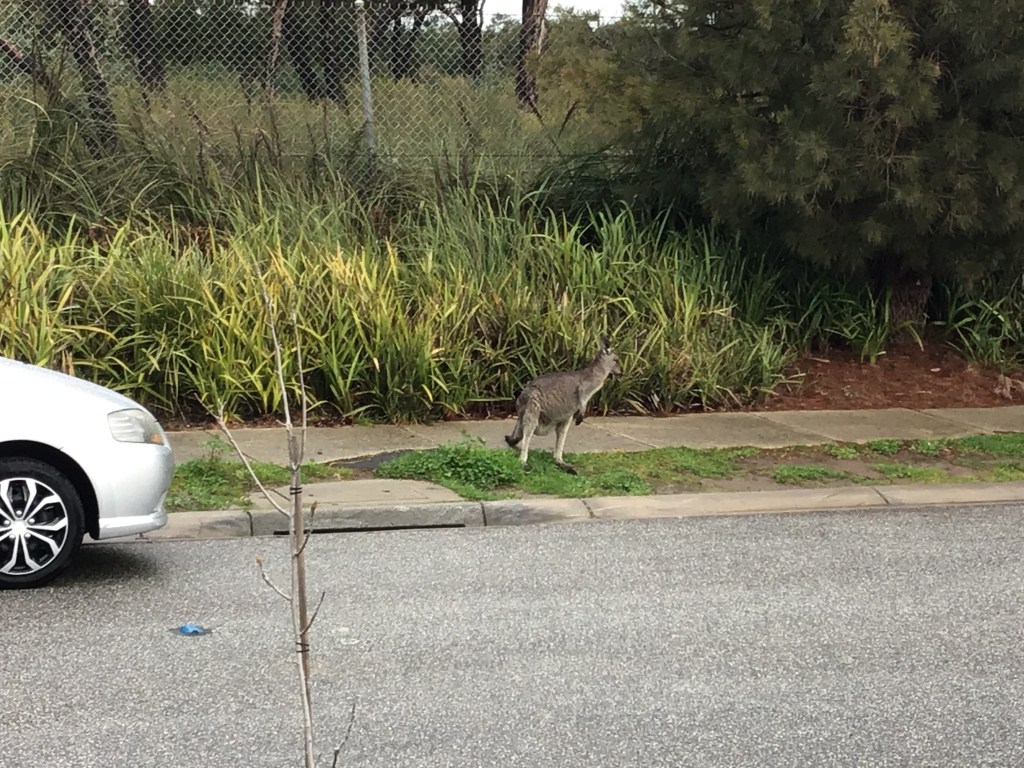
So I threw on a dressing gown and rushed out the front door yelling and waving my arms around. They just looked at me nonchalantly and only moved at all when I started running towards them. Despite my constant shouting and wild gestations, about twenty of them refused to disperse. They sat looking at me belligerently from a tree across the street, my mailbox, the side fence, my roof and neighbouring roofs. I was delighted to look across he street to see a young kangaroo, unperturbed and munching on some grass from the footpath. I retrieved the seed block and took it inside the house and eventually, perhaps bored with the lack of activity, they headed off in a huge formation like a swarm of locusts. Later that morning, coming home from our morning walk we discovered that the cockies had returned and had spitefully pulled the heads of my snow flakes in retaliation.
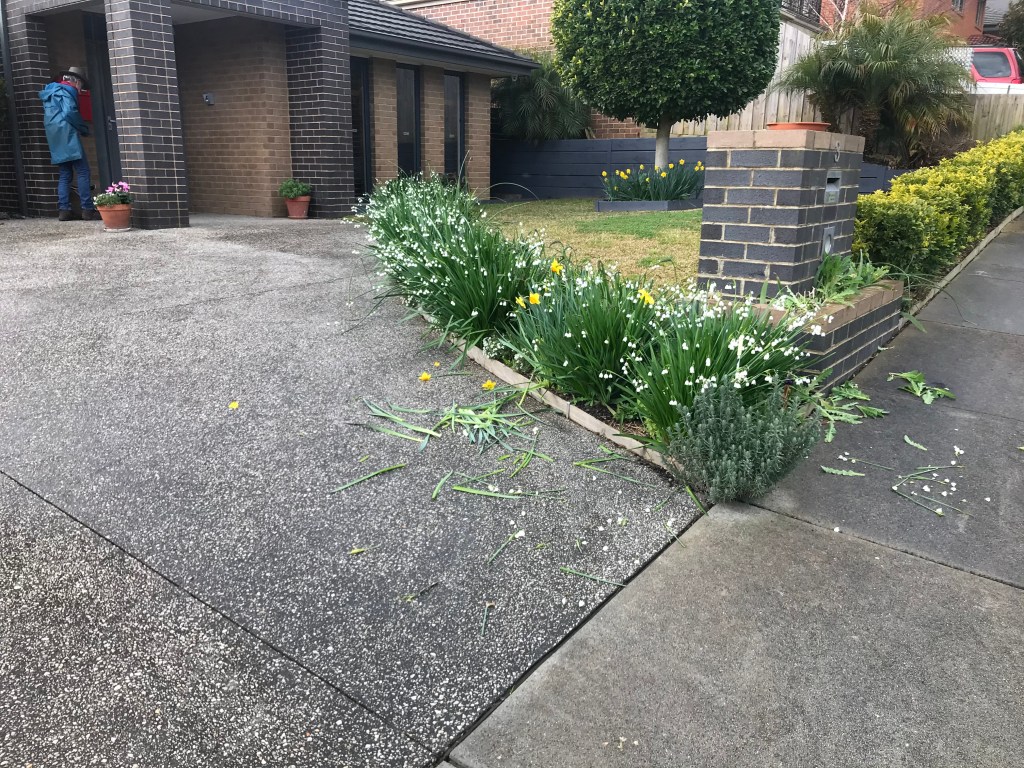
After that episode, I made it a habit to remove the seed block every night at sunset and to only replace it after nine in the morning. This particular morning, however, we slept late and perhaps the juvenile rosella had become impatient for his breakfast. While they were at first extremely skittish and flew off the second they heard the front door open or heard footfall on the driveway when we returned from our daily walks, they had appeared to become tamer and more accustomed to us with each passing day. The incident with the window tapping made me wonder if perhaps it was us, rather than them who had become tamed!
 maryannsholidays